

Space Medicine
Spaceflight presents a completely new frontier for human physiology and medical care. Astronauts operate in microgravity, confined living quarters, sustained radiation exposure, disrupted circadian rhythms, and psychologically demanding conditions — all of which fundamentally change how the human body responds to illness and injury. Traditional medical practices cannot be applied in the same way off-world, making advanced diagnostics, autonomous care, and rapid-response therapies essential to mission readiness and survival.
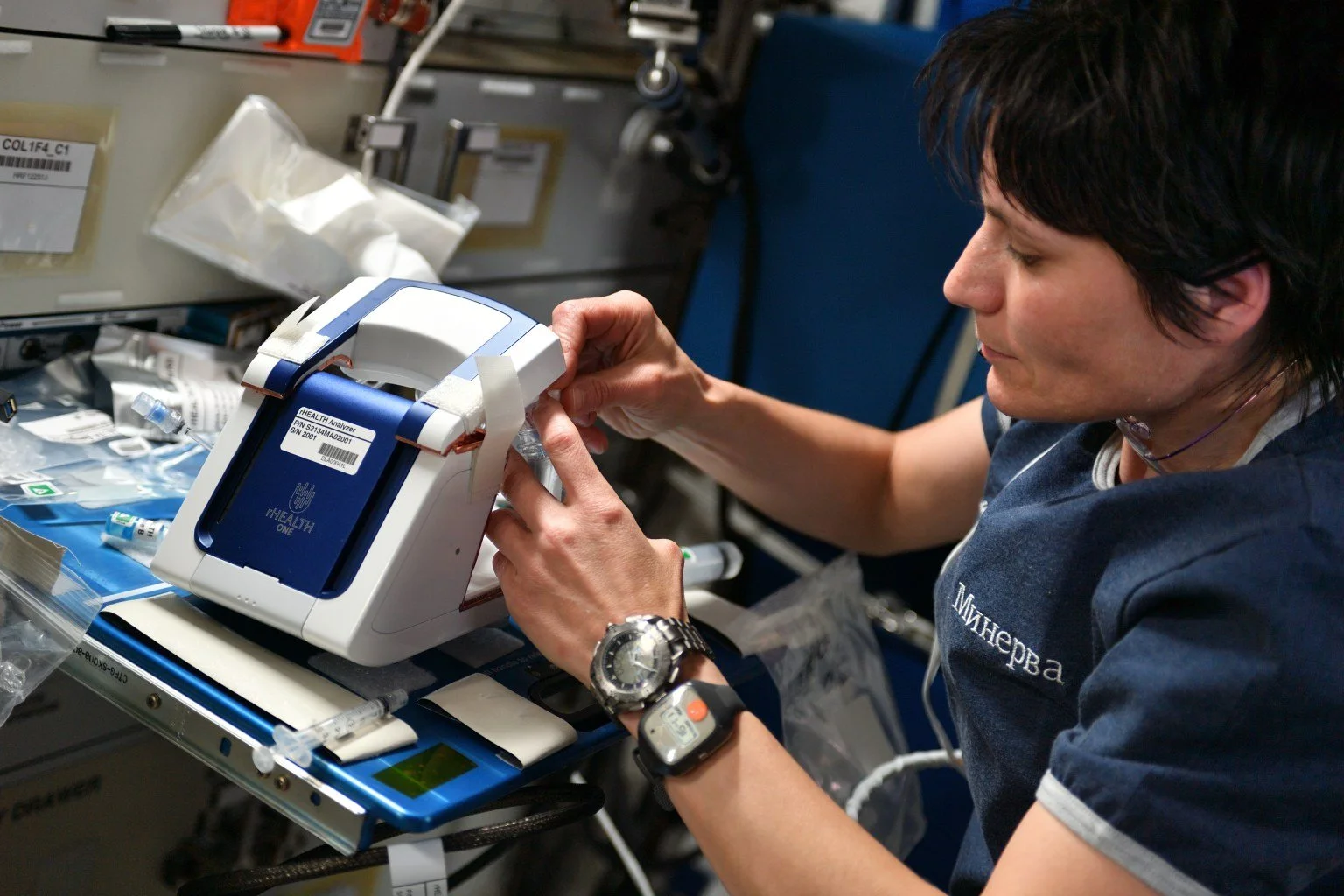
rHEALTH® ONE — Successfully Operated on the International Space Station
In May 2022, the rHEALTH® ONE diagnostic device was successfully tested aboard the International Space Station (ISS) by SpaceX Crew-4 Commander Samantha Cristoforetti.
This milestone validated years of research and development at DMI. The device’s advanced optical sensing, cytometry, biomarker chemistry, nanostrip technology, and proprietary software — now part of rHEALTH®’s commercial platform — performed seamlessly in microgravity, marking a major step toward autonomous, real-time diagnostics in space.
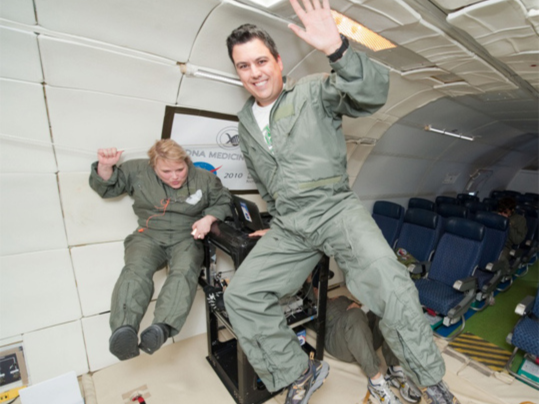
rHEALTH® Sensor Validated in NASA’s Reduced-Gravity Flights
Before its deployment to orbit, DMI’s rHEALTH® sensor underwent rigorous testing under simulated microgravity through NASA’s Facilitated Access to the Space Environment for Technology (FAST) program in Houston, Texas.
As part of this program, DMI conducted multiple flights aboard a Boeing 727 parabolic aircraft, where the rHEALTH® system operated flawlessly across zero, lunar (1/6th g), and 1.8 g conditions for up to 25 seconds per flight segment.
Joint teams from DMI and NASA’s Glenn Research Center (GRC) successfully executed all experiments — including sample loading, microfluidic mixing, and optical detection — confirming that rHEALTH® maintained complete performance stability under rapidly changing gravity levels.
The DNA Medicine Institute (DMI) successfully completed reduced-gravity experiments on its rHEALTH sensor for the Facilitated Access to the Space Environment for Technology (FAST) program, at the National Aeronautics and Space Administration (NASA) in Houston, Texas. The rHEALTH sensor is designed to extract a multitude of diagnostic information from a single drop of blood. Although designed for use in reduced-gravity environments in space, the technology can be applied to real-time health monitoring at patient’s bedside or in a doctor’s office, and allow for real-time clinical intervention in acute situations. It was one of 17 technology demonstration projects, from 10 different states, for reduced-gravity aircraft flights. The DMI device was subject to zero, lunar, and 1.8 g conditions for periods up to 25 seconds in a Boeing 727 airplane flying repeated parabolic trajectories. A joint team from DMI and NASA’s Glenn Research Center (GRC) successfully performed experiments on the rHEALTH platform, which included sample loading, mixing, and detection. The device operated without fail on all four lunar and zero gravity flights.
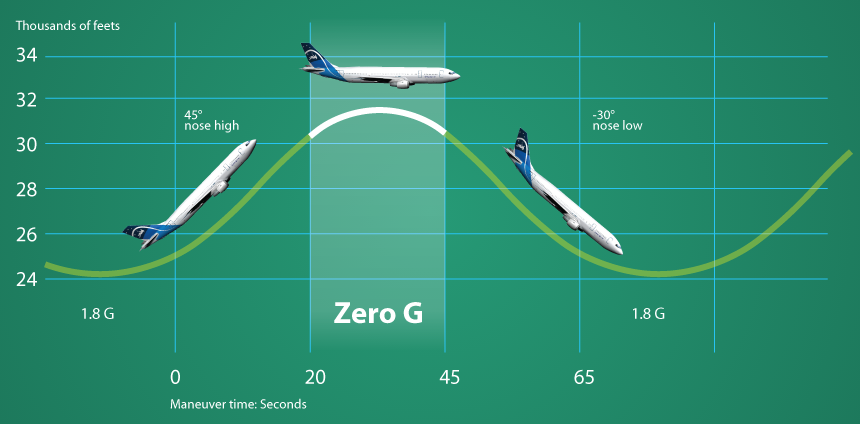
Microgravity in Motion: Highlights from Flight Week
-

Pre-Flight Preparation
The DMI and NASA teams conducted detailed equipment checks and safety briefings before takeoff. Every component of the rHEALTH system was inspected for resilience under variable gravity conditions.
-
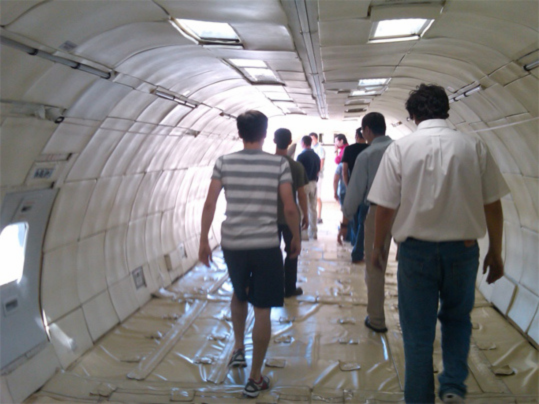
The Zero-G 727 Aircraft
Our experiments were conducted aboard a modified Boeing 727, uniquely equipped for parabolic flight testing. The cabin’s padded interior provided a safe, controlled environment for conducting microgravity research.
-
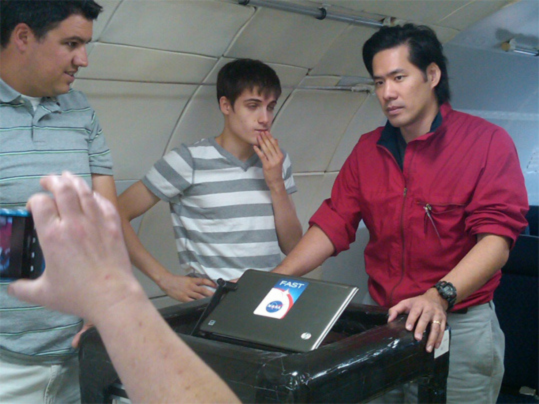
Inside the Flight Cabin
With all passenger seats removed, the aircraft’s open cabin allowed researchers to move freely during weightless intervals.
-
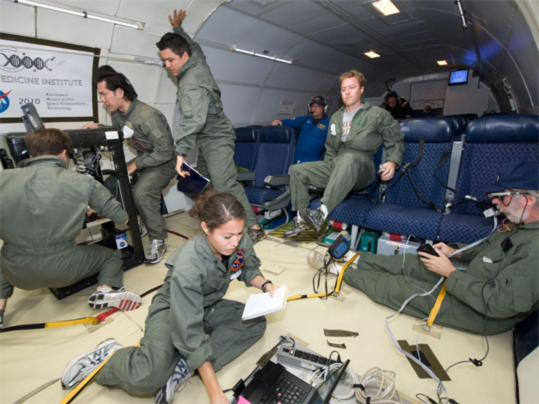
Preflight Briefing
Before each flight, DMI and NASA scientists reviewed protocols for sample loading, microfluidic mixing, and optical detection under variable gravity.
-
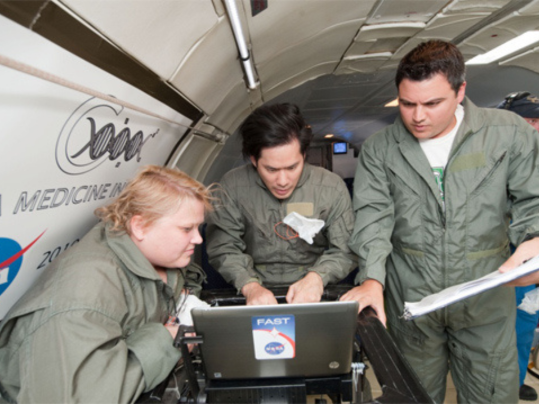
Experiment in Action
The rHEALTH platform was tested under real flight conditions — from sample handling to software-controlled diagnostics — ensuring consistent performance in reduced gravity.
-
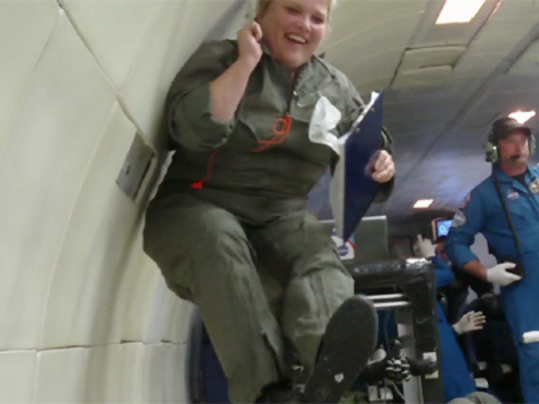
Lunar Gravity Simulation
Experiments were performed under 1/6th Earth’s gravity, mimicking lunar conditions. These trials validated rHEALTH’s stability and data accuracy under partial gravity.
-
Zero Gravity Success
In full zero-G conditions, the team successfully executed mixing, loading, and detection operations—demonstrating the robustness and adaptability of the rHEALTH system for future space missions.